Koplev Lab

Research

We develop computational and statistical methods and use them on single-cell and spatial omics of human tissue. These are the main lines of work.

Each line of work pairs data from human tissue with methods built for it: statistical models of cell states and their responses to perturbation, gene regulatory networks that connect genetic risk to tissues and cell types, and machine learning models of how cells are arranged in tissue.

Stromal cell states in inflamed tissue

How inflammation pushes fibroblasts into disease-driving states, and whether those states can be reversed.
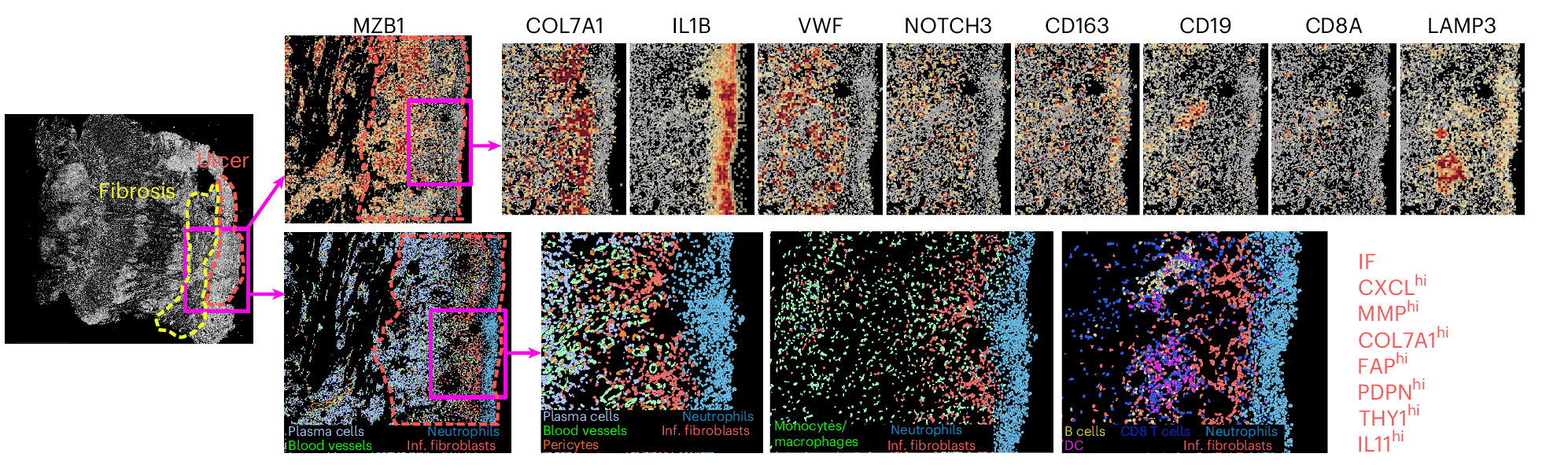
Spatial transcriptomics images of Crohn's disease bowel tissue around an ulcer, with expression maps for marker genes such as COL7A1, IL1B, VWF and CD19.
Gene expression mapped at single-cell resolution across an ulcer in the bowel wall of a patient with Crohn's disease. Koplev et al., Nat. Immunol. 2026

Read more Stromal cell states in inflamed tissue

Inflammation and stem cells in the gut

How long-term inflammation changes intestinal stem cells, and with them the structure of the gut lining.
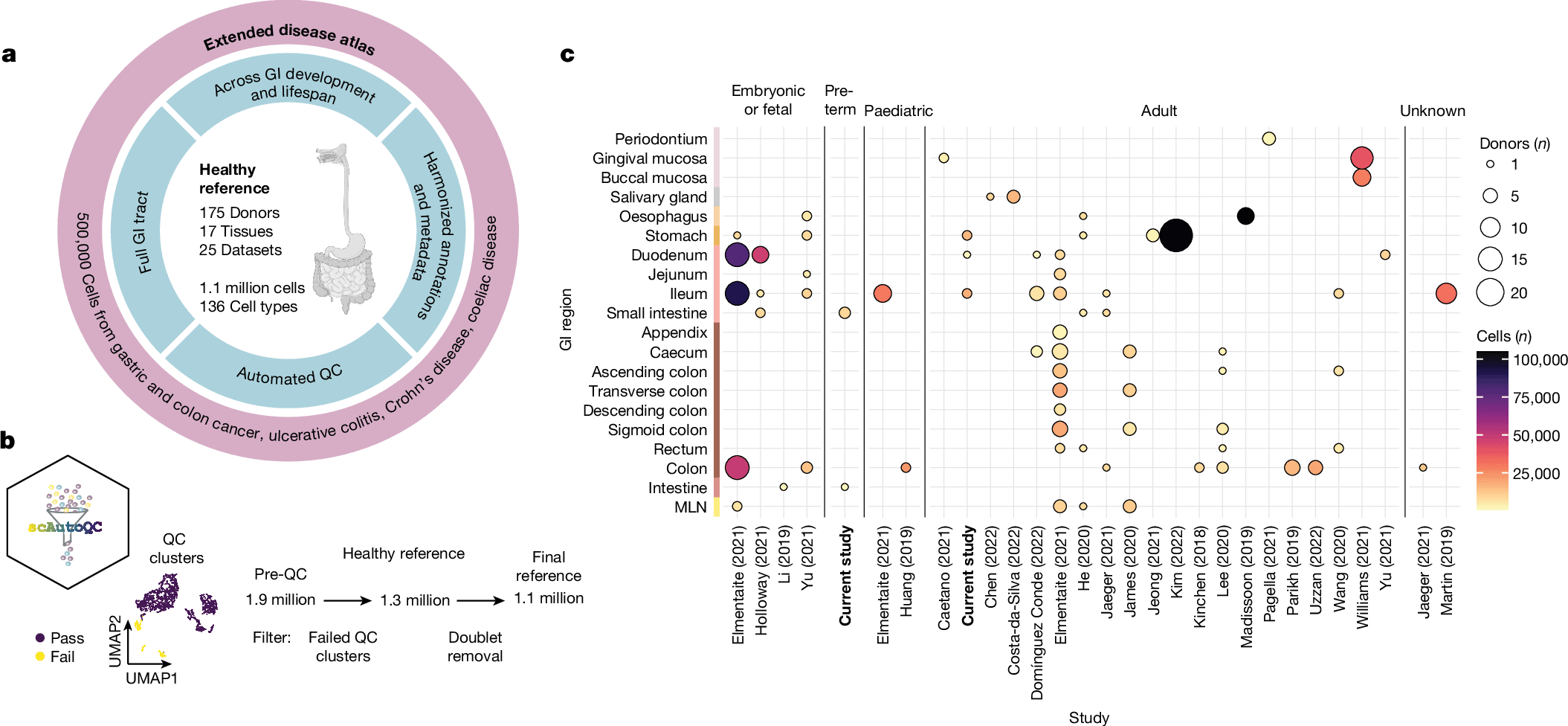
Overview of the gut cell atlas. A ring diagram describes the healthy reference of 1.1 million cells and 136 cell types with disease datasets around it, next to a chart of datasets by gut region and study.
Design of an integrated single-cell atlas of the human gastrointestinal tract in health and disease. Oliver et al., Nature 2024

Read more Inflammation and stem cells in the gut

Gene regulation and genetic risk in the heart

Placing inherited risk for cardiovascular disease in the specific cells and heart regions where it acts.
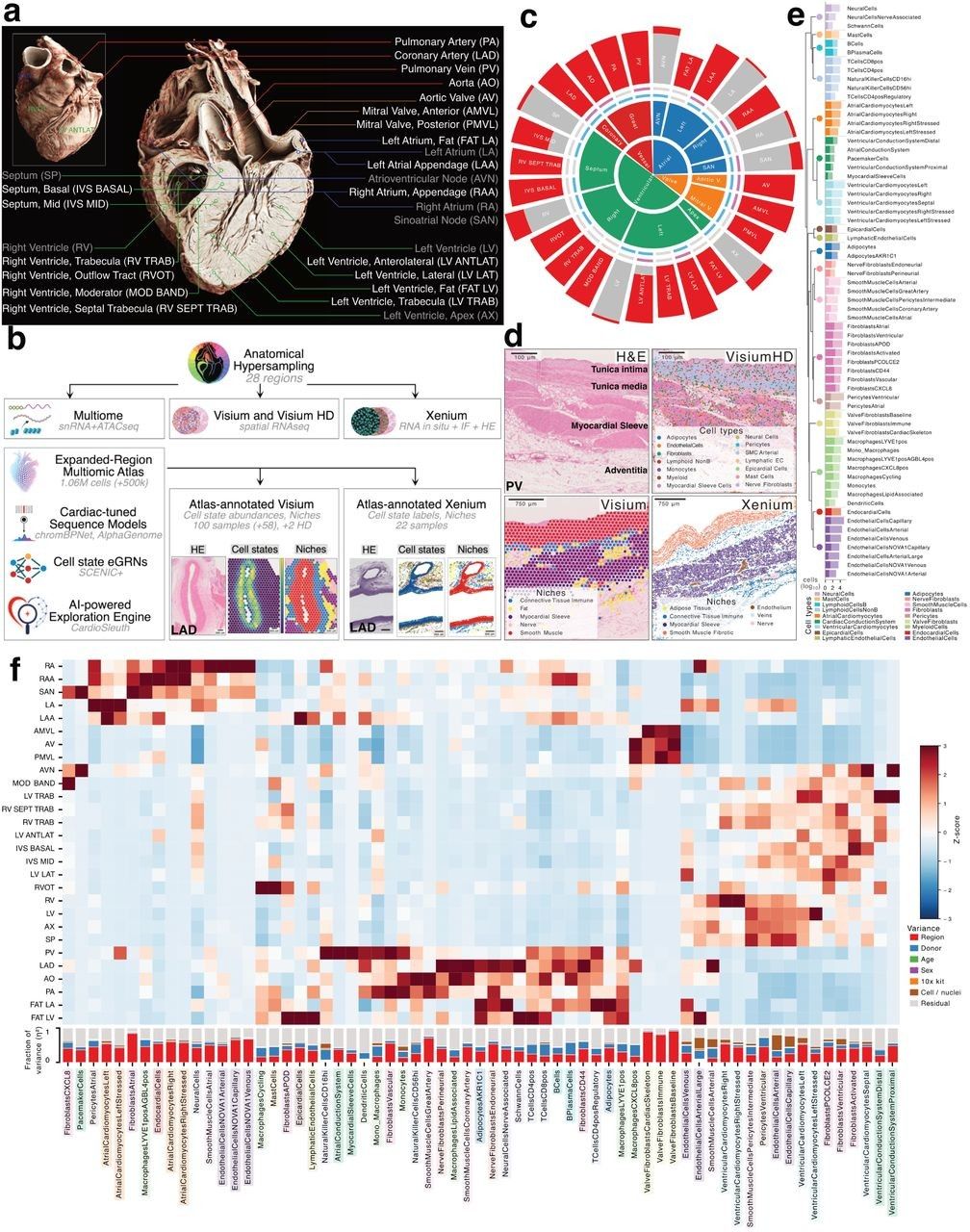
Overview of the adult human heart atlas. An annotated photograph of a heart marks the sampled regions, beside a diagram of the profiling methods and a heatmap of cell states across regions.
Twenty-eight regions of the adult human heart, profiled with paired single-nucleus RNA and chromatin accessibility assays and with spatial transcriptomics. Cranley et al., bioRxiv 2026

Read more Gene regulation and genetic risk in the heart