Inflammation and stem cells in the gut
How long-term inflammation changes intestinal stem cells, and with them the structure of the gut lining.
Question
What happens to the lining of the gut, and to the stem cells that renew it, during chronic inflammation?
Approach
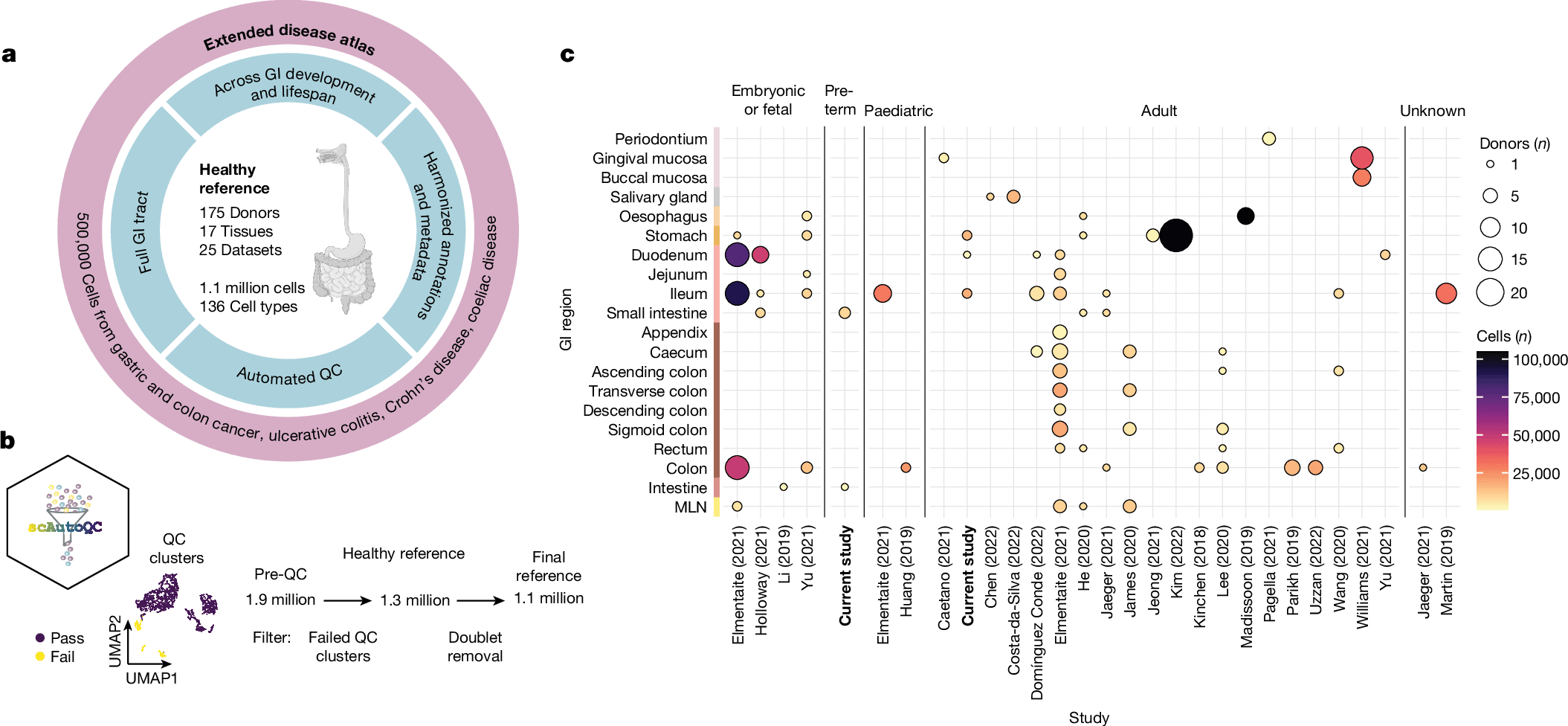
Twenty-five single-cell RNA sequencing datasets are integrated into a healthy reference of about 1.1 million cells and 136 cell states that spans the whole gastrointestinal tract. Twelve disease datasets are then mapped onto it: gut cancers, coeliac disease, ulcerative colitis and Crohn’s disease.
Why it matters
The atlas revealed metaplastic epithelial cells that arise from stem cells in inflammatory bowel disease. They resemble cells of the pyloric and Brunner’s glands and recruit immune cells, including T cells and neutrophils. Inflammation-driven changes in stem cells can remodel tissue structure and feed further inflammation, an idea that may hold in other tissues too.
People
- Simon Koplev PI